.png)
PLL has 3 OpCos (KY, RI, PA) that all have different websites. The goal is to create an interim KY site before the unified One PLL website is launched.
Current and prospective Kentucky customers who want to manage their electric & gas services online.
How can PLL reduce the need for service agent assistance for customers to manage their utilities online?
Update the site to include automated processes such as Start service, to limit the amount of service agents needed to assist customers.
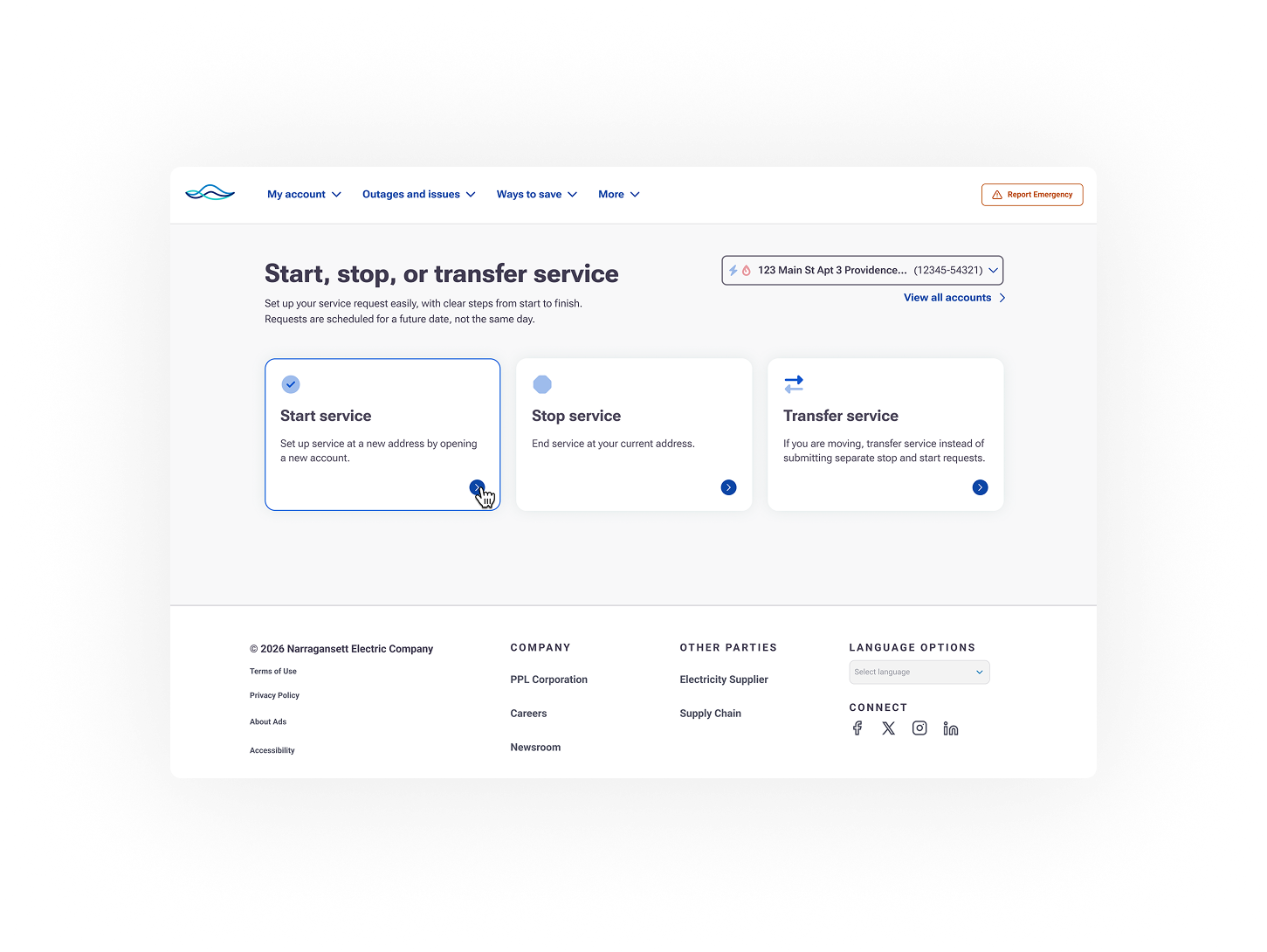
The Start Service flow lets both new and existing customers start service at a new address by creating a new account.
The process varies for each customer based on premise checks, eligibility checks and how they choose to verify their identity.
.gif)
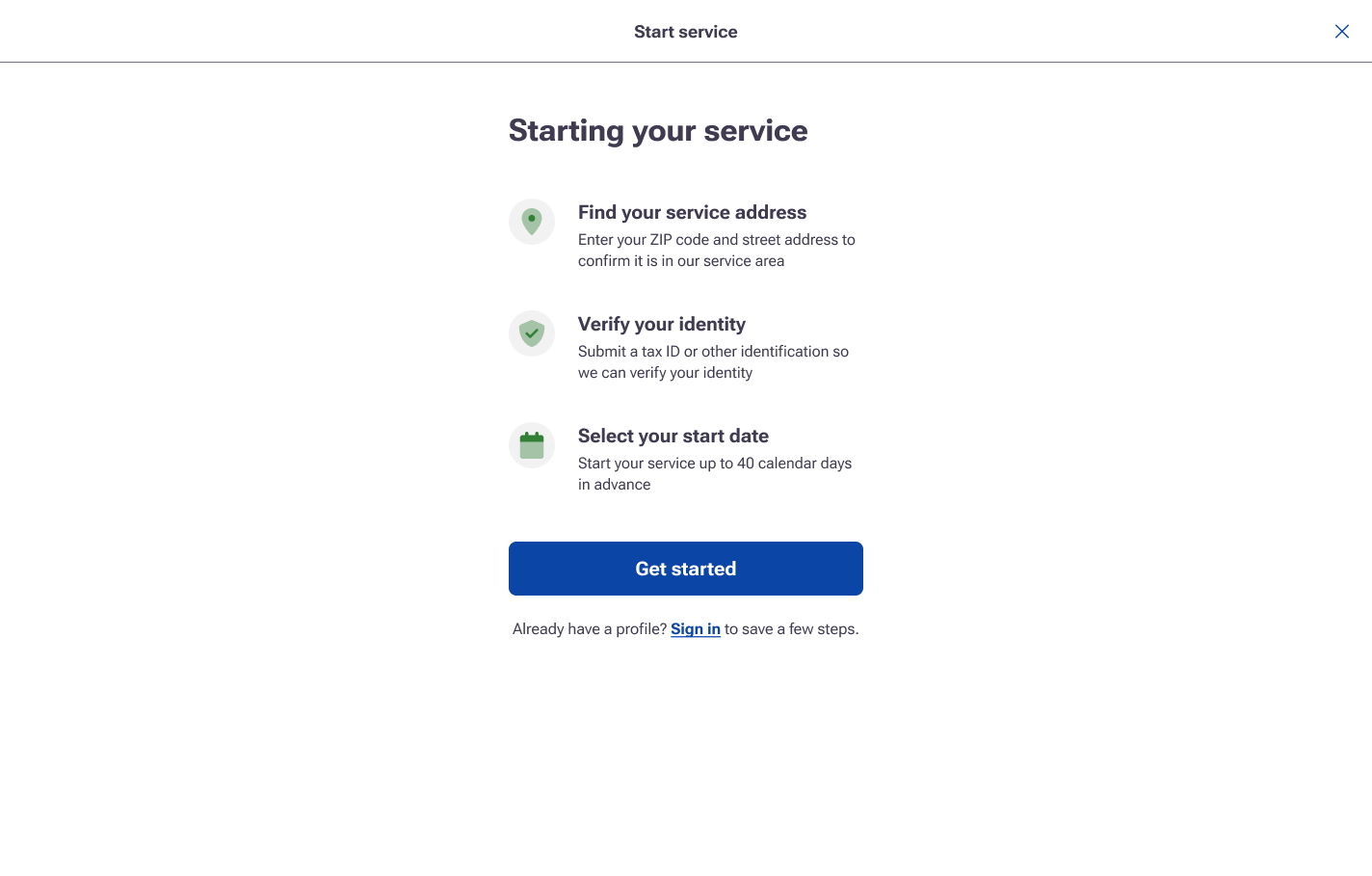
For new customers, the Start Service flow opens with an overview that explains the steps ahead which helps level set the information they need to provide to complete this process.
Under the main CTA, customers are prompted to sign in if they already have an account, enabling them to skip extra steps meant for new customers.

The first step is to identify the service address. Customers have the choice to search by address or enter a meter number. Then they review the address and the available service types and confirm before moving to the next step.
.png)
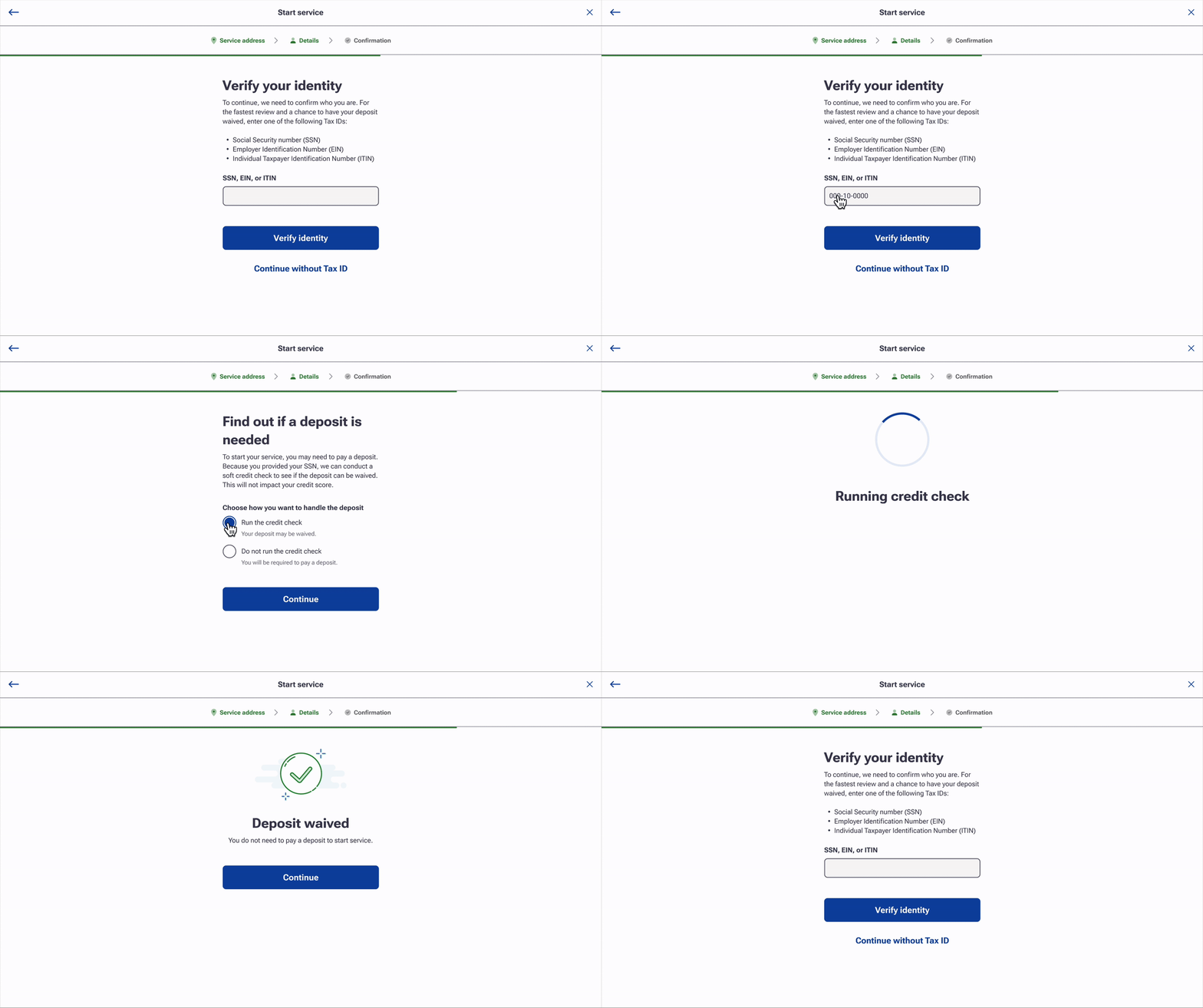
New customers are required to verify their identity by providing a tax ID and pay a deposit.
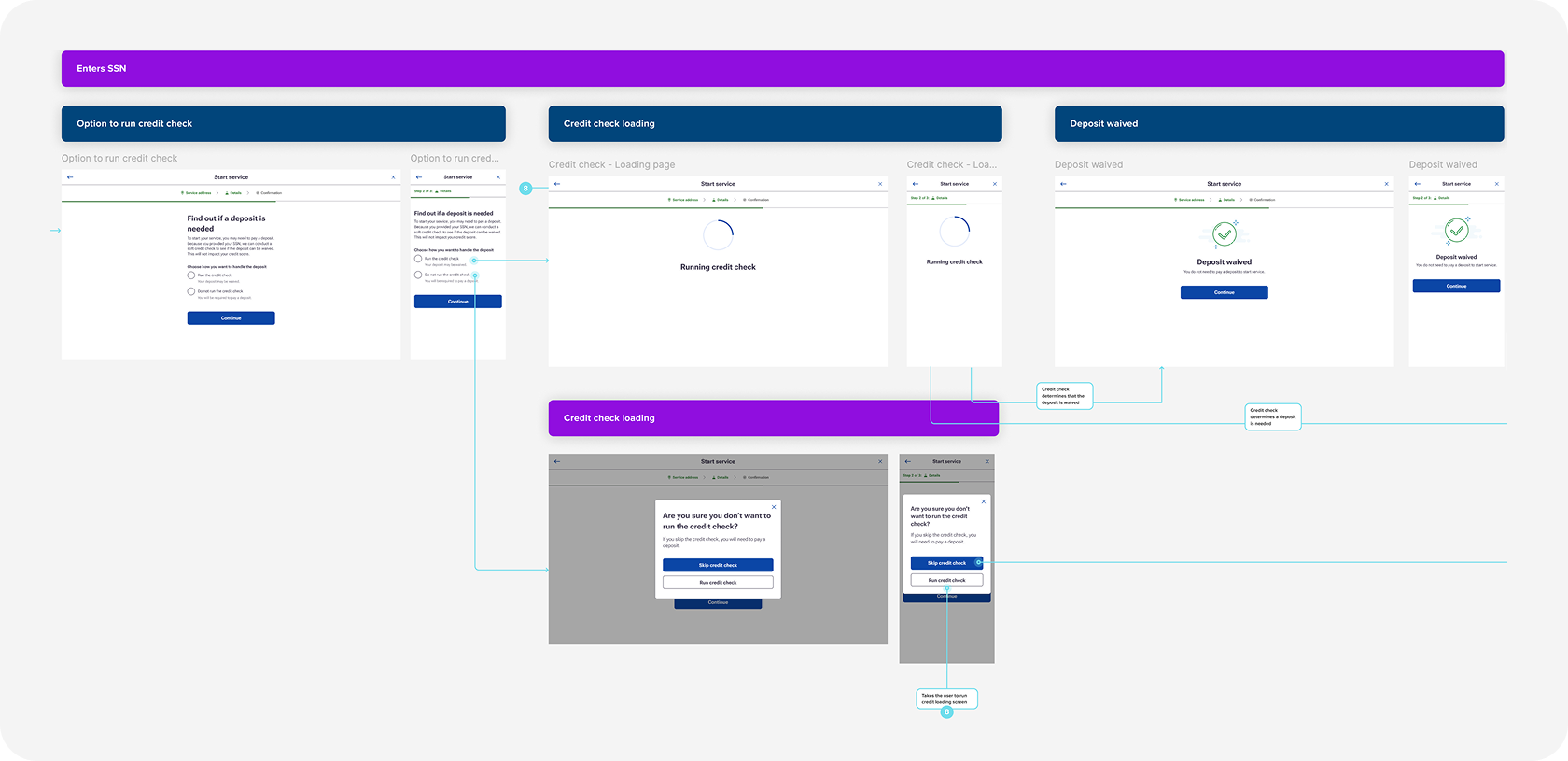
Customers who provide a Social Security number may opt into a soft credit check, which can reduce or waive the required deposit.

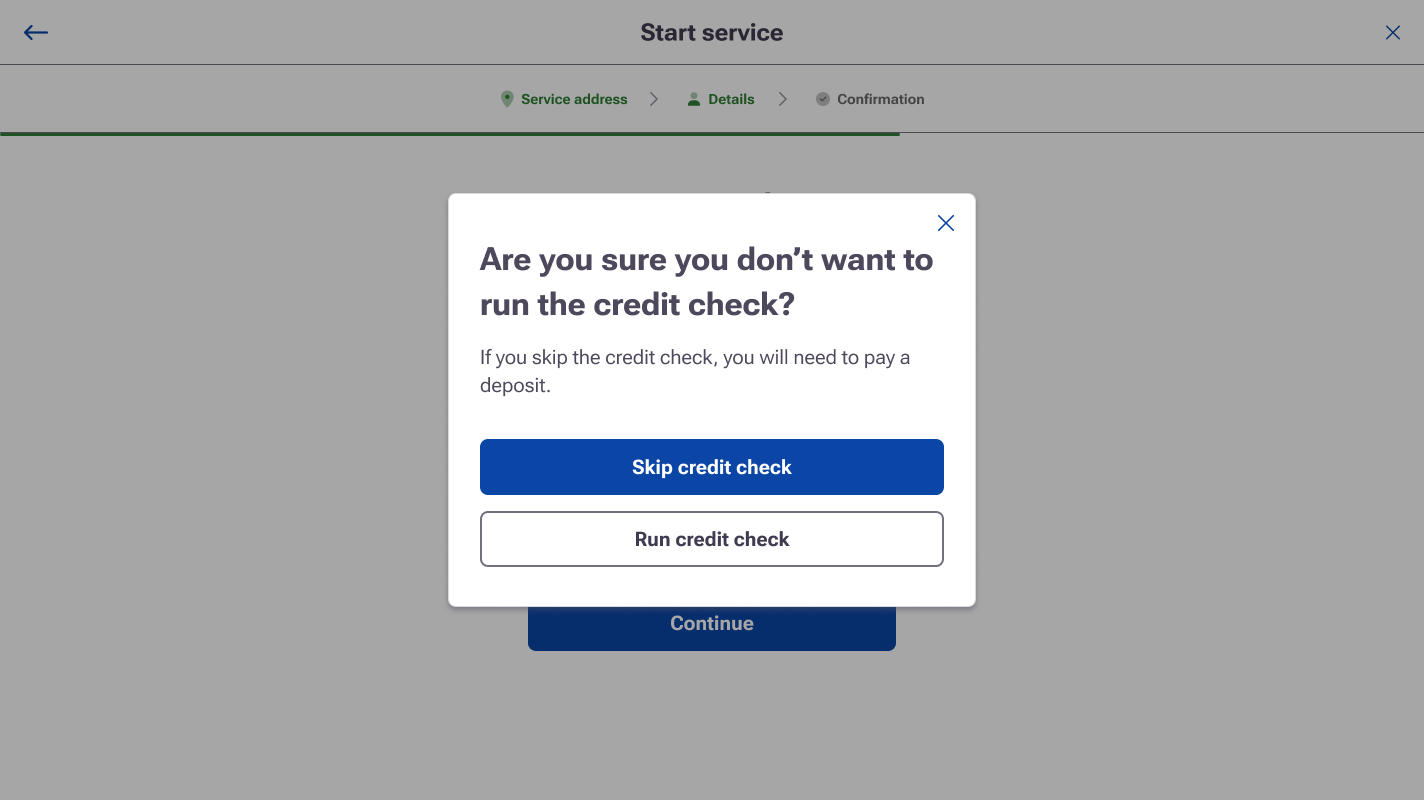
Selecting the option to decline a credit check displays a modal informing the customer that a deposit will be required. This interaction is designed to increase credit check participation.

If a deposit is required, the customer is shown the amount and can choose to pay it in full on their first bill or split the cost across six bills.
.png)
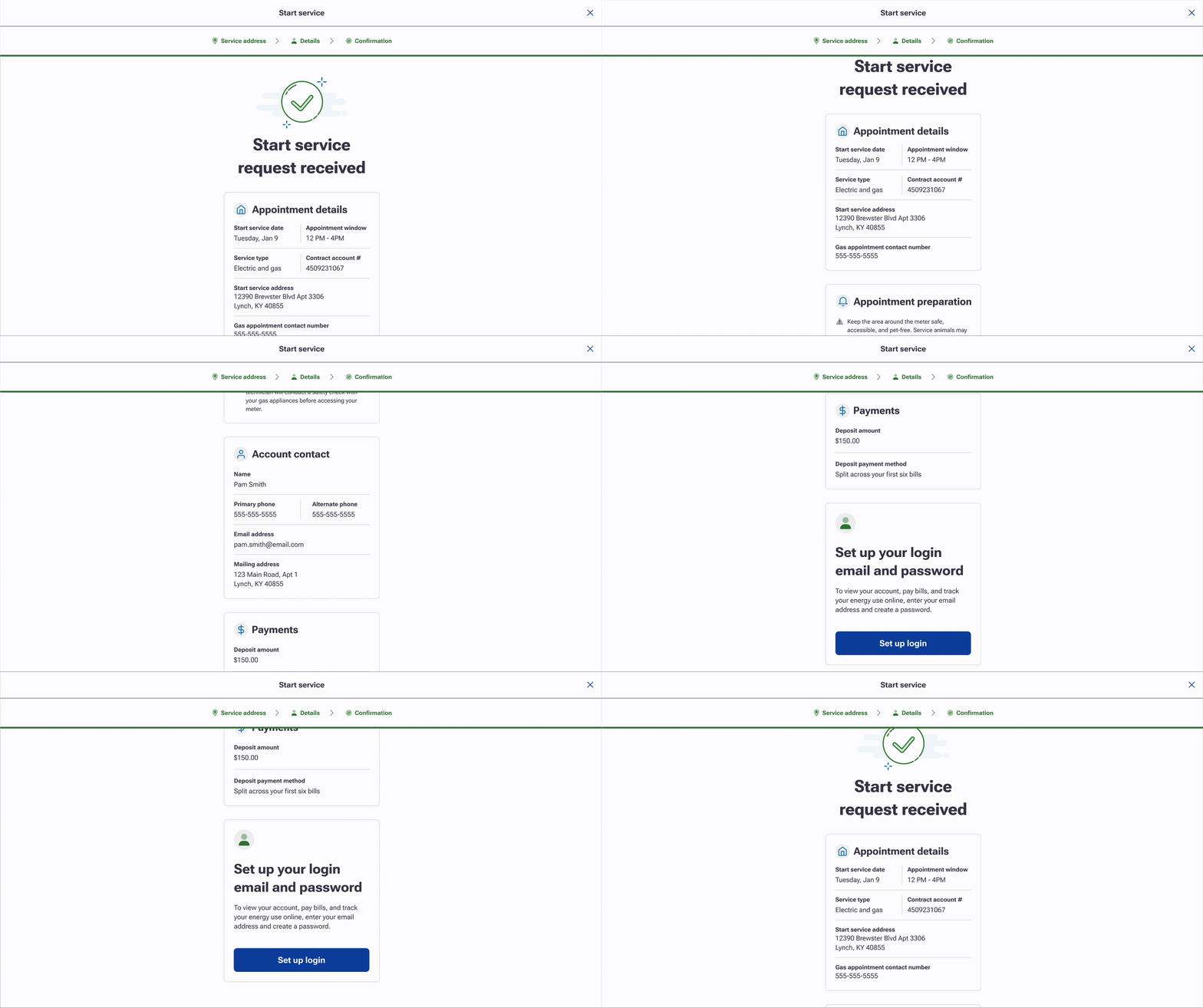
Once the request is submitted, customers see a confirmation page with clear, scannable cards displaying key information.

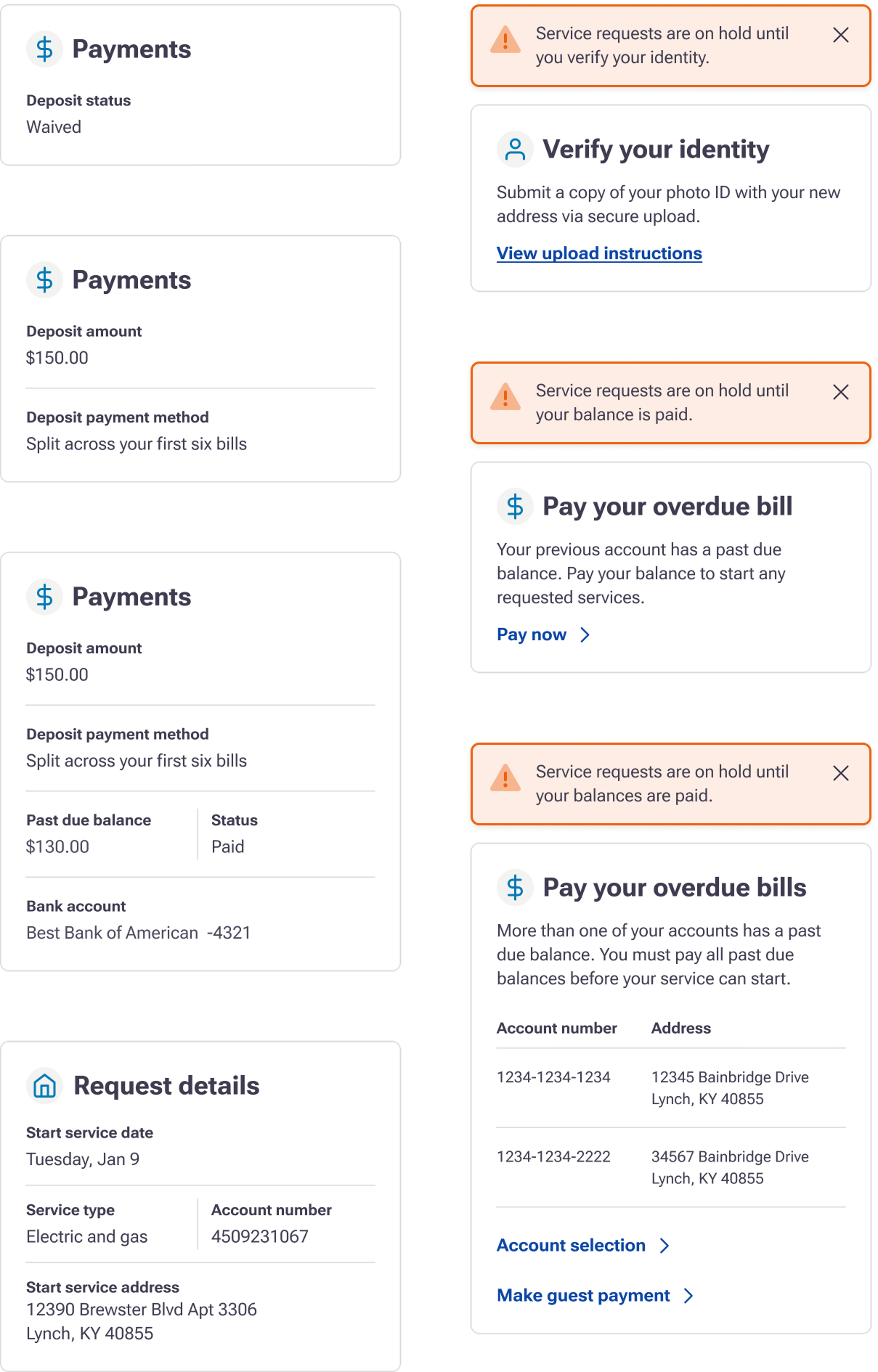
The confirmation page features flexible card components that support the wide range of start service scenarios.
Warning banners appear above cards to let customers know when there’s something they need to do before their request is fully processed.

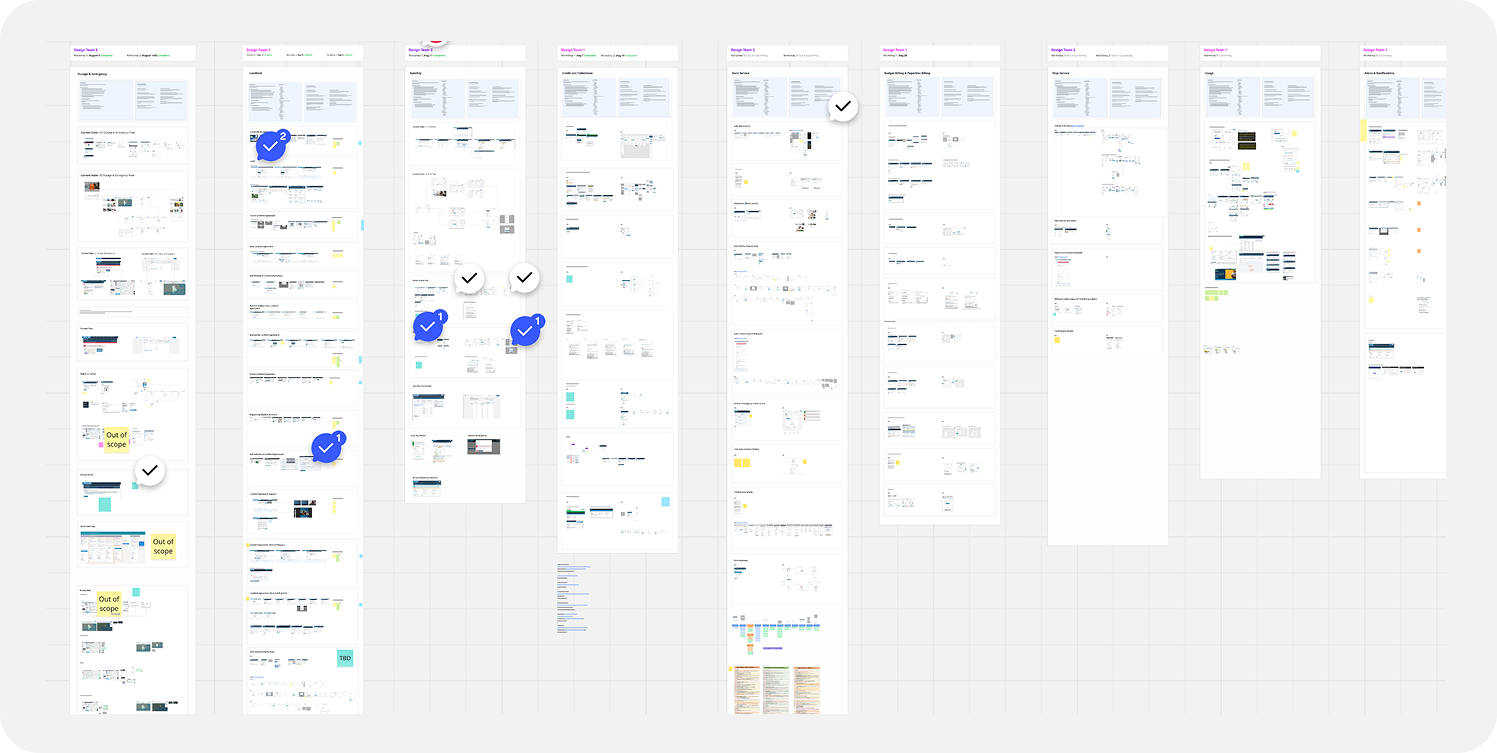
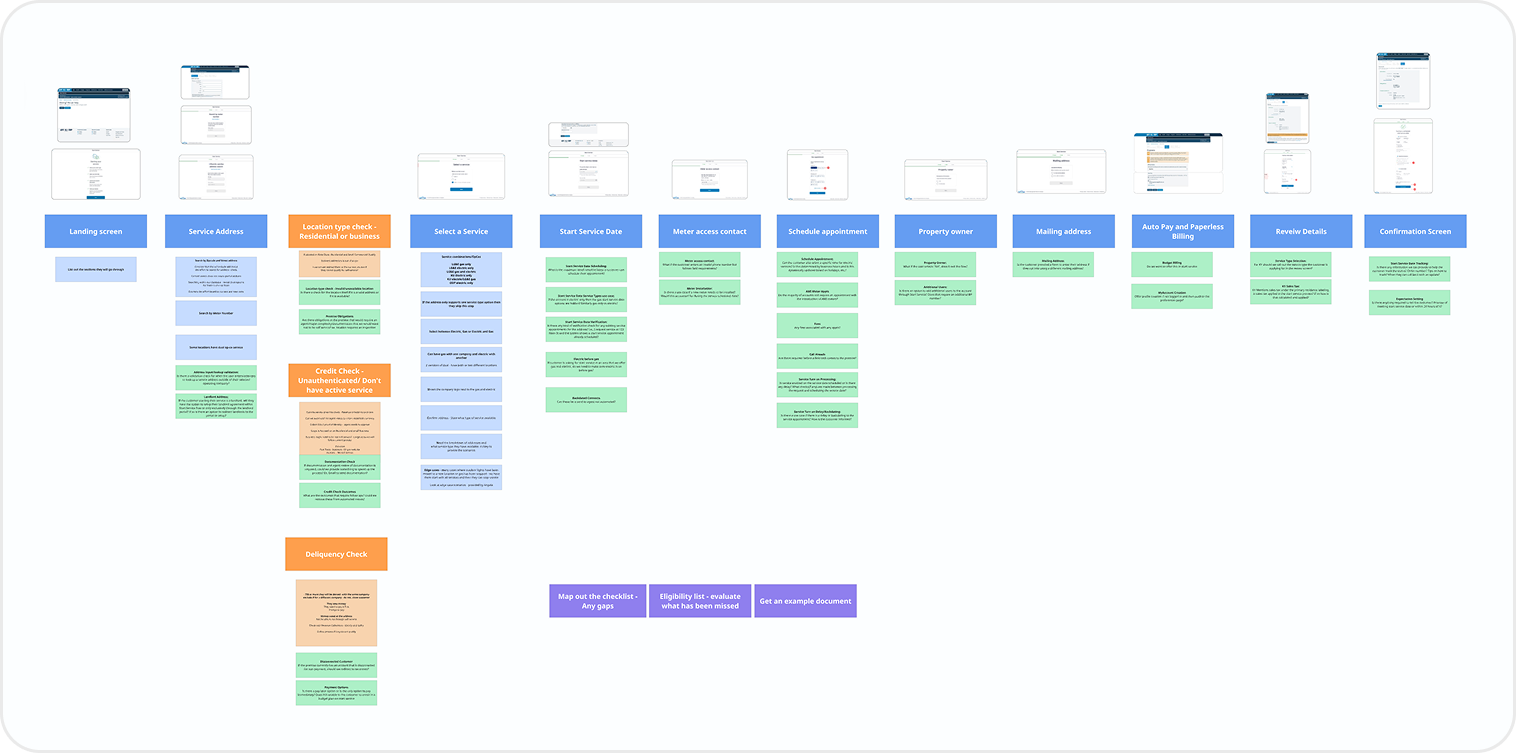
For each of the 7 features I led, I ran requirements workshops with stakeholders and SMEs, using a board that compared current KY screens with RI designs and highlighted open questions.

Snapshot of the Miro board used for the workshops.

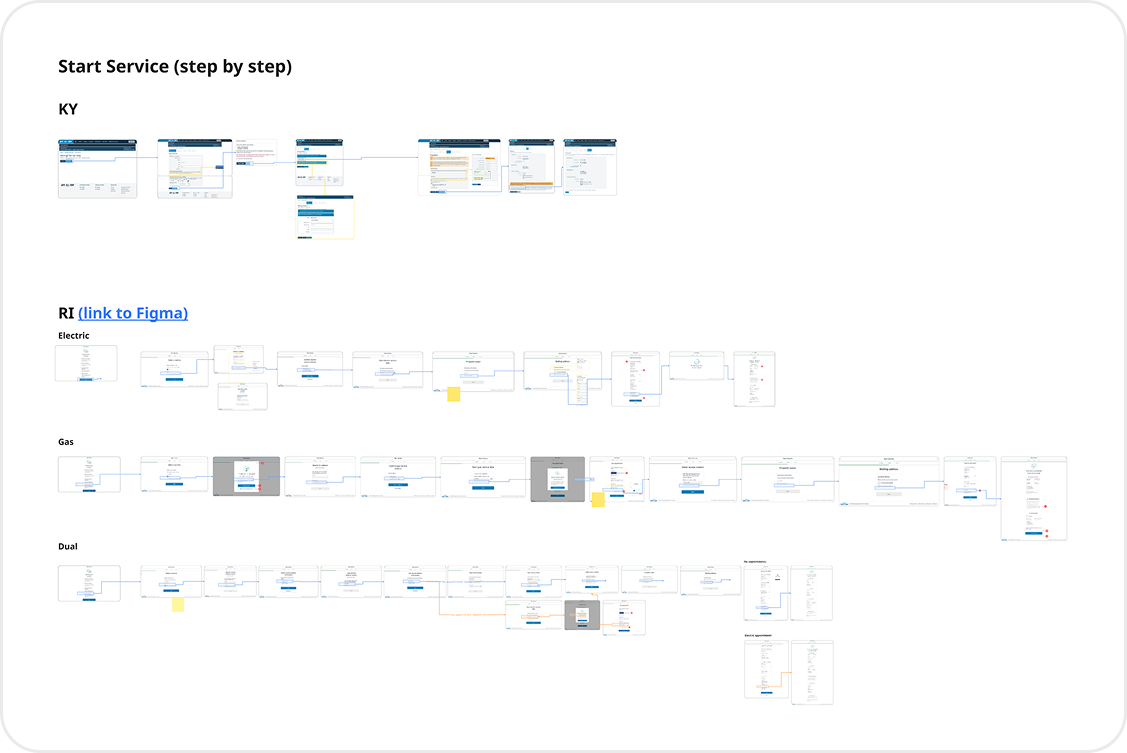
Part of the Start Service workshop board.

Mapping out the new KY start service flow.
I approached each workshop as an iterative learning opportunity. After the session I reflected on what went well and where I could improve for future sessions. Because each feature required multiple workshops, each session became more effective than the last.
With so many changes introduced to the experience, I began by mapping the end-to-end process flow to ensure alignment before designing screens. The existing process depended on a basic web form that was sent to an agent. The goal of the new experience was to shift as much of the process as possible into automation, while reserving agent involvement only for exceptions and complex scenarios.
.png)
Procecss flow built in LucidChart for the Start Service feature.
This process flow evolved across four iterations as assumptions from earlier workshops were challenged. Reviewing the diagram collaboratively with POs and SMEs allowed us to rebuild alignment, restructure the experience, and address missing scenarios.
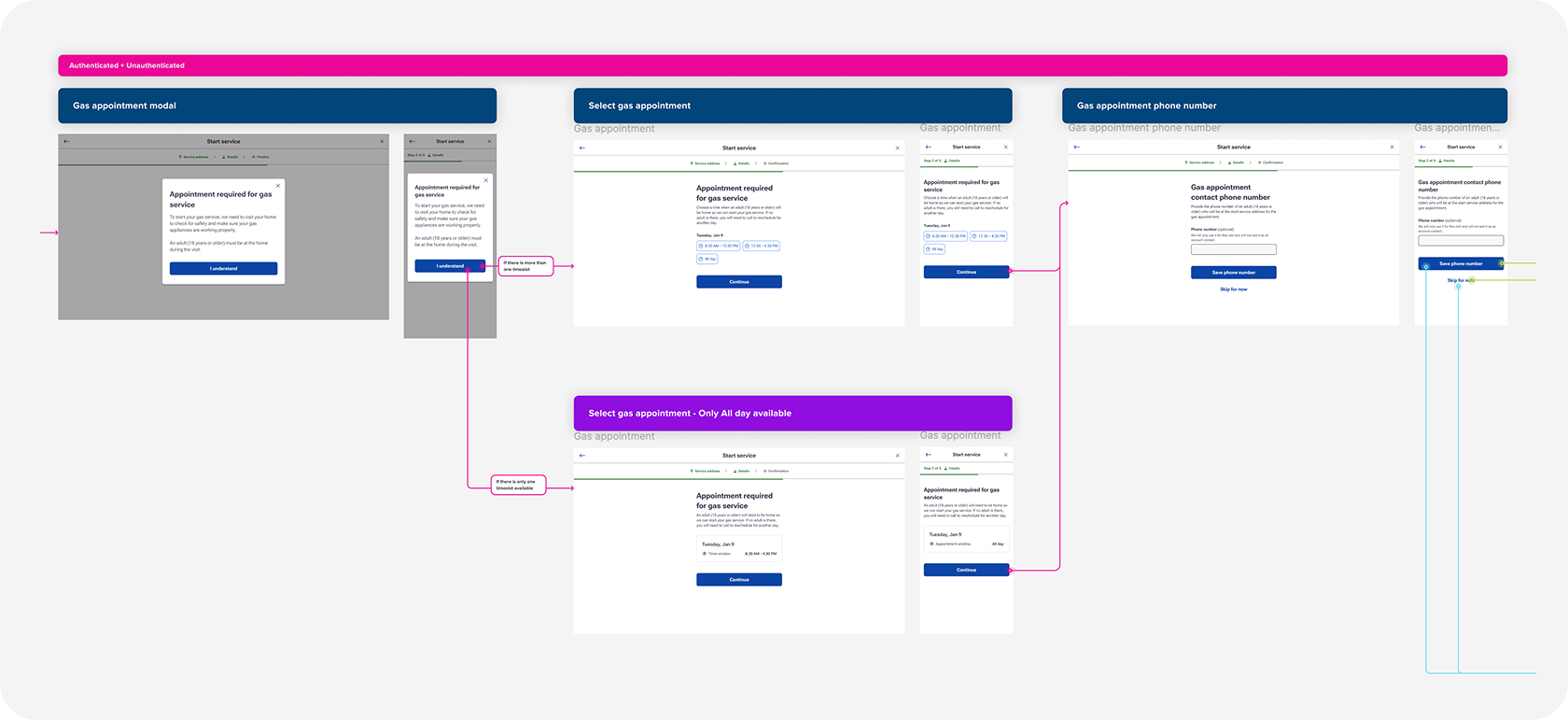
For each feature, I clearly labeled each flow and individual screen and add annotations where needed. This allowed for a smooth hand off to developers or any person on the team who was reviewing the design files.

Annotations for the gas appointment flow.

Annotations for the verify ID flow.
Designs for each of the seven features moved through five levels of review and approval. Screens were iteratively refined at each stage based on feedback, a process that became increasingly complex when balancing multiple features within the same sprint.
.png)
Navigating multiple review stages with different audiences helped me grow as a design leader, learning how to confidently present, influence decisions, and tailor communication to each group.
.png)